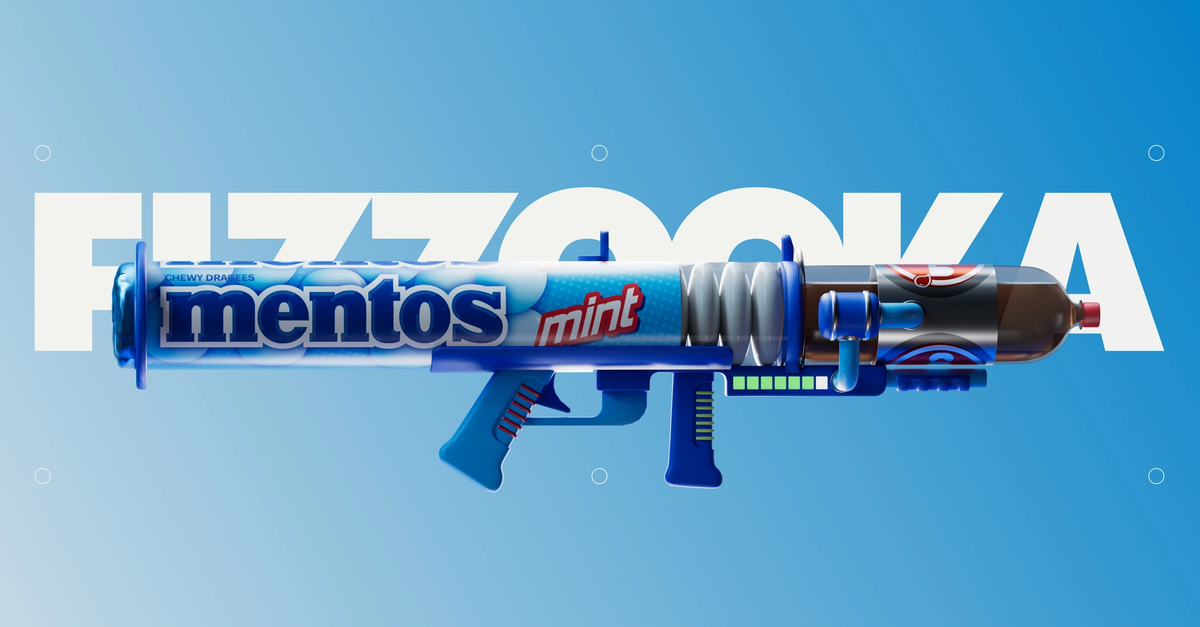
Mentos Fizzooka
Most FMCG brands enter gaming as wallpaper — a logo on a loading screen, a skin nobody equips. Mentos and BBH avoided that trap by asking a more precise question: what if the brand's core equity wasn't communicated inside Fortnite, but weaponised by it? The Fizzooka, introduced as Fortnite Creative's first branded tactical item, let players fire a Mentos-and-cola geyser at opponents — making the 30-year-old viral chemistry experiment the explosive itself. That mechanical specificity matters. Where Wendy's destroyed in-game freezers to extend a real-world brand position, the Fizzooka worked because the reaction *is* the brand position: chaotic, fizzy, disproportionate. The weapon didn't sit alongside gameplay; it created a distinct tactical choice players had to account for. Fortnite Creative's item ecosystem is fiercely competitive for player attention — 12.1 million uses across 40 million minutes of play indicates the Fizzooka moved beyond novelty-pick territory into repeat adoption, a threshold most limited-time items never cross. The surrounding media architecture — trailer content, creator livestreams, OOH — functioned as a content flywheel: in-game play generated footage, footage drove new plays, new plays generated more footage. The result was a 590% lift in social engagement and 500M impressions of reach, figures that reflect earned amplification rather than paid saturation. The test of any gaming integration is whether it changes session behaviour. This one did.
72M
Social views in week one
10M
Fortnite plays in week one
500M
Global reach
590%
Social engagement lift
12.1M
Fizzooka uses
40M (equivalent to 76 years of continuous play)
Minutes played
Creative Strategy DNA
Industry
Style
Objective
Innovation
Sources
Related Campaigns
Campaign descriptions are original editorial content. OnBrief is not affiliated with the brands or agencies featured. Takedown policy