Missing Articles
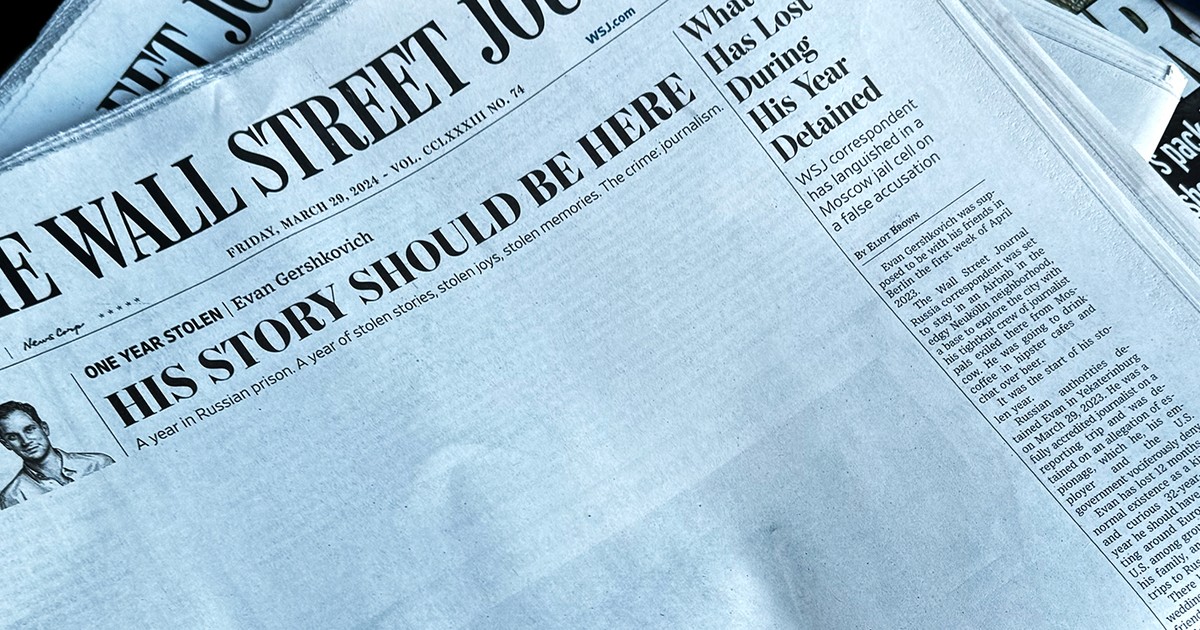
Silence is louder than any editorial argument a newspaper can make. On the one-year anniversary of Evan Gershkovich's arrest by Russian authorities, the Wall Street Journal weaponized its own platform against the conditions that had silenced him — publishing blank spaces where his stories should have appeared. The execution required extraordinary restraint: in a medium defined by words, the most powerful statement was their absence. Each void on the page wasn't decorative whitespace; it was a precise accounting of what journalism had lost. Mother New York understood that the WSJ's credibility as a news institution made this gesture categorically different from a brand awareness play — this was the product itself, the journalism, refusing to pretend normalcy. The campaign worked because it collapsed the distance between form and argument. You didn't need to read a headline about press freedom; you were experiencing its erosion in real time, staring at the gap where a story should be. That experiential dimension — the discomfort of the missing, not the description of the missing — is what separates this from a standard advocacy campaign. For an industry that increasingly struggles to make press freedom feel urgent to readers who take it for granted, blank space proved more urgent than any op-ed. Gershkovich was released in August 2024 in a prisoner exchange.
Creative Strategy DNA
Industry
Format
Culture
Platform
Audience
Objective
Sources
Related Campaigns
Campaign descriptions are original editorial content. OnBrief is not affiliated with the brands or agencies featured. Takedown policy