Too Hot To Handle - Season 2 Launch
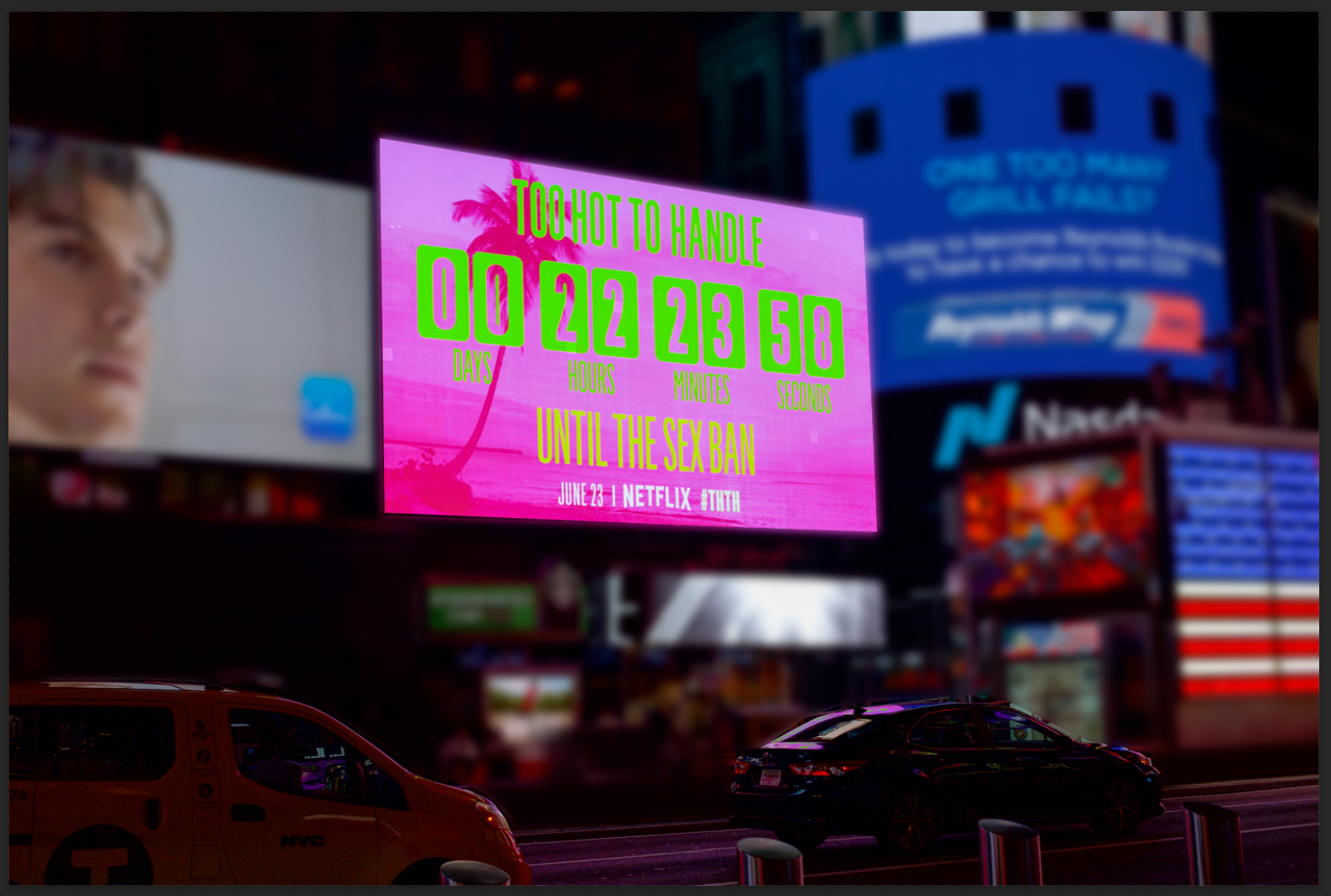
The most durable OOH creative finds the single product truth so specific it becomes a public spectacle — and 'Sex Ban' is about as specific as it gets. Netflix and production company Party Land launched Too Hot To Handle Season 2 in Times Square with a live countdown clock to the show's central rule: contestants forfeit prize money for any sexual contact. No cast. No tagline. No Netflix branding softening the message. Just a provocative mechanic stated plainly in large type, with a timer attached. The strategic logic is sound: the sex ban is the show's most counterintuitive differentiator, the one element no competitor property could credibly claim. Foregrounding it in OOH — a format with no targeting, no skippability, and maximum ambient reach — meant the execution worked on two audiences simultaneously: the uninitiated, for whom it demanded explanation, and existing fans, for whom it was direct provocation. The countdown mechanic manufactured time pressure rather than scarcity, triggering the same psychological urgency associated with live events. Whether that translated to measurable subscription lift or earned media value remains undocumented in available sources — a notable gap given the campaign's apparent cultural visibility. The restraint of the execution is its clearest strength: no justification copy, no celebrity equity borrowed. The creative trusted that one genuinely strange sentence, said loudly in public, would do more work than a polished brand campaign. That confidence in simplicity is the lesson.
Anticipation for Season 2 hit a fever pitch, ensuring the show stayed a cultural conversation point
Campaign Objective
Creative Strategy DNA
Industry
Format
Mechanic
Emotion
Culture
Platform
Audience
Objective
Innovation
Results
Sources
Related Campaigns
Campaign descriptions are original editorial content. OnBrief is not affiliated with the brands or agencies featured. Takedown policy