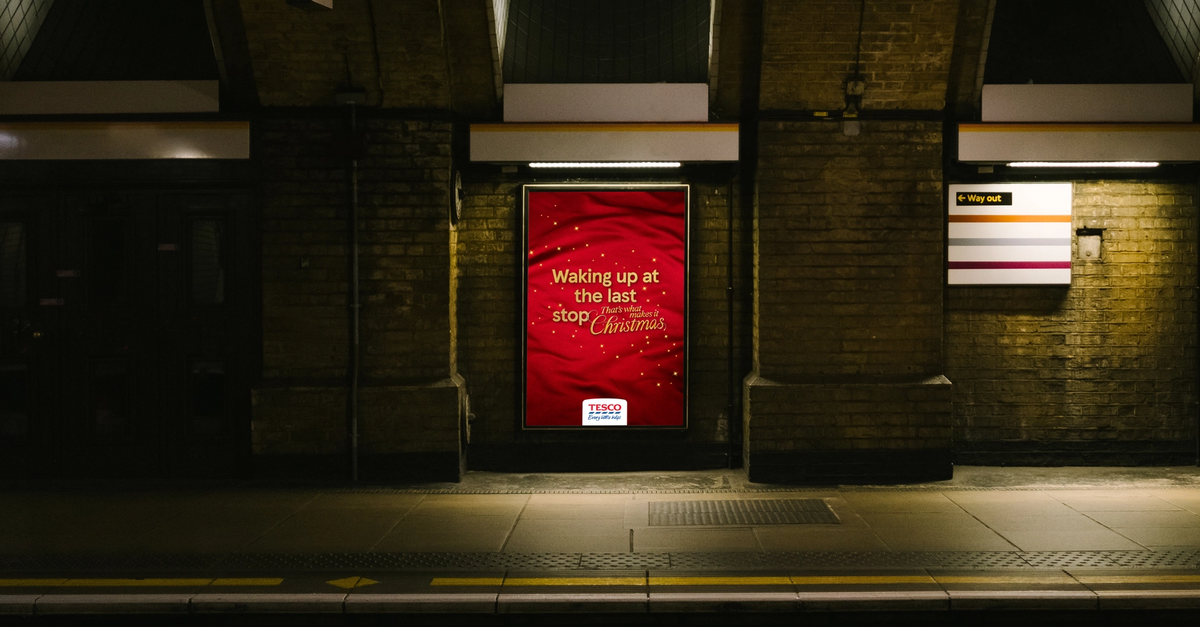
Tesco Christmas 2025
The Christmas advertising arms race has conditioned audiences to expect emotional manipulation dressed as warmth — and most viewers know it. BBH's insight for Tesco was that the gap between aspirational Christmas advertising and lived Christmas experience had become so wide it was actively alienating. Rather than close that gap with better production, they leaned into it entirely. The campaign deployed eleven standalone short films, each capturing a specific, unglamorous truth of British Christmas — regional awkward silences, pets destroying things, family members nobody knows how to seat. No single narrative, no redemptive arc, no swelling strings over a reconciliation scene. Just the texture of actual Christmas, served at scale. The executional decision to build eleven distinct films rather than one hero spot was structurally important: it multiplied recognition moments, giving different family types permission to see themselves in different films, which dramatically expanded the shareable surface area across social. What distinguishes this from generic 'real moments' advertising is specificity — the details were British enough, granular enough, and self-aware enough to signal genuine cultural observation rather than research-committee approximation of authenticity. Tesco reached a ten-year market share high, hitting 29.4% in December. The F&F Christmas jumpers sold out entirely — proof that the campaign's warmth transferred directly to product.
10 year high
Market share
29.4%
Market share in December
all sold out
F&F jumpers
50 pieces
Media coverage
Creative Strategy DNA
Industry
Emotion
Platform
Audience
Objective
Innovation
Sources
Related Campaigns
Campaign descriptions are original editorial content. OnBrief is not affiliated with the brands or agencies featured. Takedown policy